
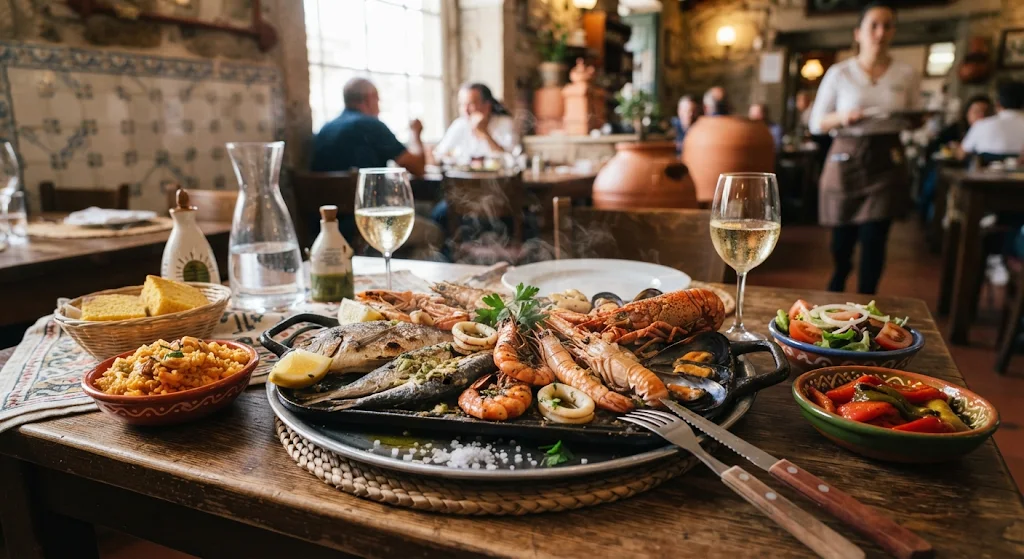
Portuguese seafood reflects a long relationship with the Atlantic, where fishing traditions, regional ingredients, and straightforward cooking bring the character of the coast to the table. From charcoal-kissed fish to shellfish simmered with herbs and wine, each dish offers a different expression of Portugal’s maritime culture.
Coastal Traditions in Portuguese Seafood Cuisine
Portugal’s extensive Atlantic coastline has made fish and shellfish central to regional cooking. Local markets and restaurants often build menus around the day’s catch, while olive oil, garlic, lemon, coriander, and sea salt provide a distinctive but restrained foundation.
That approach leaves room for striking contrasts: smoky charcoal, bright citrus, tender shellfish, and rich rice dishes. The result is a cuisine that feels generous without relying on elaborate sauces.
Regional Ingredients and Cooking Methods
Grilling is especially suited to whole fish and firm seafood because direct heat develops a lightly charred exterior while preserving moisture inside. In coastal towns, the aroma of fish cooking over charcoal is part of the dining landscape, and simple seasoning allows the quality of the catch to remain apparent.
Other preparations use a covered pan to combine seafood, vegetables, and aromatic broth. These methods reflect a practical culinary tradition: ingredients are cooked together so their flavours mingle, while the finished dish remains tied to the sea.
Grilled Fish and Seafood Specialties
Among Portugal’s best-known dishes, Grilled sardines stand out for their deep, savoury flavour and crisp skin. Often served with bread or boiled potatoes, they are associated with summer gatherings and popular street celebrations, where grilling brings people together as naturally as the meal itself.
Grilled sea bass offers a milder alternative, typically cooked whole and finished with olive oil and lemon. Grilled cuttlefish has a firmer texture and takes well to garlic and herbs, while Grilled octopus is often tenderised before grilling to balance its smoky exterior with a supple centre.
Classic Dishes Beyond the Grill
Not every seafood favourite depends on an open flame. Clams à Bulhão Pato are cooked with garlic, olive oil, coriander, and wine, creating a fragrant broth that is traditionally enjoyed with bread. Their simplicity shows how a few well-chosen ingredients can turn shellfish into a memorable dish.
Bacalhau, or salt cod, occupies a special place in Portuguese food culture. It is prepared in many ways, from oven-baked dishes to combinations with potatoes and eggs; although it is preserved rather than fresh, it belongs to the broader story of Portugal’s seafaring cuisine.
For a quick guide to the range of preparations, these dishes illustrate how ingredients and cooking techniques shape different flavours:
- Grilled sardines: smoky, savoury fish commonly served with simple accompaniments.
- Clams à Bulhão Pato: shellfish in a garlic, coriander, olive oil, and wine sauce.
- Grilled octopus: tender seafood finished over high heat for a lightly charred surface.
- Bacalhau: versatile salt cod prepared in numerous regional styles.
Seafood Rice and Portuguese Stews
Rice dishes and seafood stews offer a more comforting side of the cuisine. Seafood rice is usually served moist, with rice absorbing a broth enriched by shellfish, fish, tomato, and aromatics. Its appeal lies in that balance: the grains carry the flavour, while the seafood remains the focus.
A Cataplana is both a distinctive cooking vessel and the name associated with dishes prepared in it. The hinged copper or metal pan traps steam, allowing seafood and other ingredients to cook together in their own juices. A Portuguese seafood stew follows a similar spirit, though its ingredients and consistency vary by region and cook.
Regional Variations and Balanced Flavour
Peri-peri prawns bring heat and brightness to the seafood table, with chilli complemented by garlic, citrus, and oil. The seasoning adds intensity without hiding the prawns’ sweetness, making the dish a lively contrast to milder grilled fish and gently simmered stews.
Local availability also influences what goes into a pot or onto the grill. A cook may adapt the combination of shellfish, fish, herbs, and vegetables to the catch at hand, keeping the method familiar while allowing each region to express its own character.
Dining Customs and Seafood Pairings
Portuguese seafood is often served with uncomplicated sides that complement rather than compete: potatoes, salad, bread, or seasonal vegetables. These accompaniments make sense alongside grilled dishes, while crusty bread is particularly useful for enjoying the aromatic juices of clams and stews.
When choosing among specialties, texture and preparation can guide the meal. Charcoal-grilled fish suits those who enjoy clean, smoky flavours; shellfish in garlic and herbs offers a fragrant, savoury option; rice and stews provide a fuller, broth-led experience. For regional detail or advice on ingredients and preparation, consult a knowledgeable local chef or seafood professional.