
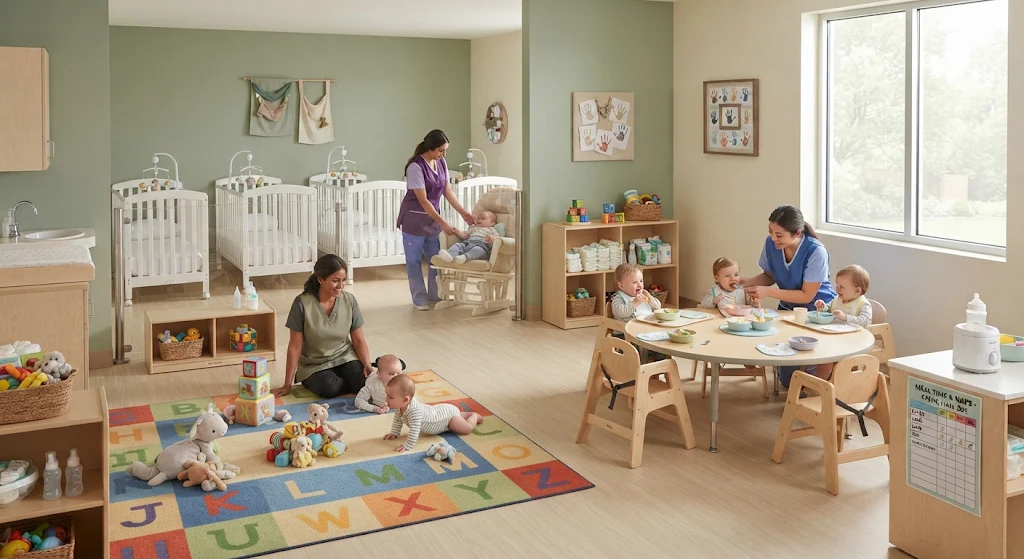
Infant classrooms must support two essential routines without allowing one to compromise the other: restful sleep and attentive feeding. Thoughtful infant classroom design separates the feeding area from each sleep space, while consistent procedures help staff maintain safe sleep practices, reduce sanitation risks, and supervise every child.
Create a Safe Sleep Environment in Infant Classrooms
A designated sleep zone makes safe sleep practices easier to follow consistently. It should be quiet, uncluttered, and arranged so staff can see and reach each infant without obstruction.
For every sleep, place infants on their backs on a firm, flat, non-inclined surface designed for infant sleep, such as an approved crib or bassinet. Use a fitted sheet, and keep pillows, loose blankets, toys, positioners, and other soft items out of the sleep space. These measures support SIDS prevention and reduce risks associated with suffocation and entrapment.
Room layout reinforces these precautions. Keep cribs away from cords, window coverings, heaters, and walkways, and follow local licensing requirements and product instructions for spacing and equipment use.
Position Cribs for Clear Supervision
Arrange sleep spaces so staff can observe infants directly and move between cribs safely. Visual monitoring supports prompt responses, but it does not replace the active supervision required by classroom policy.
Maintain Consistent Crib Safety
Check that each crib is intact and used as intended, with the mattress at the appropriate height for the child’s development. If an infant falls asleep in a stroller, swing, or other sitting device, follow current pediatric guidance and classroom procedures for moving the child to a safe, flat sleep surface.
Separate the Infant Feeding Area From Sleep Spaces
A distinct feeding area helps prevent food, bottles, and mealtime equipment from entering cribs. It also gives caregivers a practical place to clean surfaces and focus on each infant’s cues.
Set up stable seating and work surfaces that are easy to clean, with supplies organized for each child. Keep the area away from diaper-changing stations, and ensure that staff can maintain close supervision during every feed.
Responsive infant feeding means following each child’s written care plan, developmental abilities, and hunger and fullness cues. Never prop a bottle or leave an infant alone while feeding; staff should remain attentive and position the child safely according to the child’s age and abilities.
Organize Feeding Supplies and Records
Clearly identify bottles, prepared foods, and utensils for each infant, and follow storage and handling instructions. Keep allergy information and feeding plans accessible to authorized staff, so substitutions or changes are not made casually.
Apply Sanitation Between Feeds
Handwashing, cleaning, and sanitizing are distinct steps that should follow applicable health guidance and product directions. Clean feeding surfaces and reusable equipment between children, and store clean items separately from used ones to limit cross-contamination.
Coordinate Routines, Staffing, and Room Design
Even a well-equipped room depends on clear communication. Written procedures help staff coordinate sleep checks, feeding plans, cleaning tasks, and transitions while maintaining sightlines across both zones.
Before the day begins, teams can confirm individual instructions and assign responsibilities. A concise checklist can support consistency, especially when staff members rotate or multiple infants need care at once:
- Confirm each infant’s current sleep and feeding instructions.
- Check that sleep surfaces are clear and feeding supplies are correctly identified.
- Plan who will supervise infants during cleaning and transitions.
- Record relevant observations and communicate updates through approved procedures.
| Classroom Zone | Primary Safeguard | Routine Check |
|---|---|---|
| Sleep area | Firm, flat, empty sleep surface | Verify the crib is clear before each sleep |
| Feeding area | Attentive, individual supervision | Confirm the child’s plan and supplies |
| Shared equipment | Appropriate cleaning and storage | Follow sanitation procedures between uses |
Room plans should also reflect children’s changing mobility, applicable regulations, and emergency access needs. Periodic reviews can reveal blocked sightlines or clutter before they undermine safe routines.
Well-planned sleep and feeding areas turn safety guidance into repeatable daily habits. Childcare teams should consult qualified health and early-childhood professionals, as well as local regulations, for advice tailored to their setting.