
Understand Standard Shipping Containers
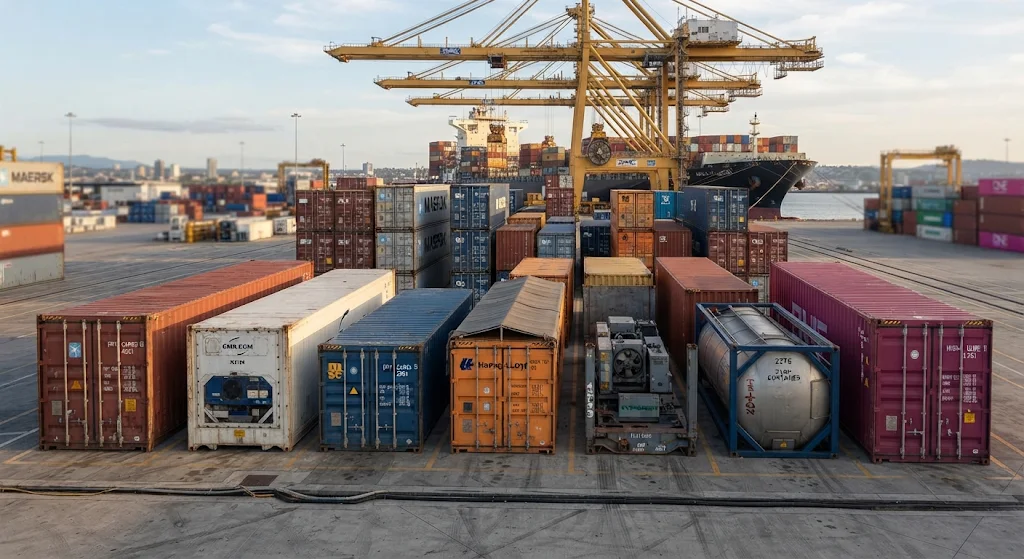
Standard containers are among the most widely used options in international maritime transport. Designed to accommodate general cargo, they provide a practical solution for businesses shipping packaged products, furniture, textiles, machinery and other non-perishable goods.
Their standardised dimensions make them compatible with container ships, port equipment, trucks and railway systems. This compatibility simplifies loading, unloading and transfers between different transportation methods.
Choose Between Common Container Sizes
Two dimensions are particularly common in international ocean freight:
-
20-foot containers: Suitable for relatively heavy cargo or smaller shipments that do not require extensive storage space.
-
40-foot containers: Offer greater capacity for bulky merchandise, larger consignments and businesses transporting substantial quantities of goods.
-
40-foot High Cube containers: Provide additional vertical space, making them useful for lightweight but voluminous products.
The appropriate size depends on cargo weight, dimensions, packaging and shipping requirements. Businesses must also consider weight distribution to avoid overloading and maintain safe transportation conditions.
Explore Specialised Shipping Containers
Not every shipment can be transported in a standard enclosed container. Certain products require temperature regulation, additional ventilation, open access or specific loading arrangements. Specialised containers address these requirements while allowing goods to travel through international maritime networks.
Transport Temperature-Sensitive Goods
Refrigerated containers, commonly called reefers, are designed to maintain controlled temperatures throughout transportation. They are particularly useful for products that can deteriorate when exposed to unsuitable environmental conditions.
Typical refrigerated cargo includes:
-
Fresh fruits and vegetables.
-
Meat, poultry and seafood.
-
Dairy products and frozen foods.
-
Certain pharmaceutical products.
-
Temperature-sensitive ingredients and beverages.
These containers use integrated refrigeration systems to maintain the required temperature. Depending on the cargo, they can provide chilled or frozen conditions. Proper monitoring is important because temperature variations can affect product quality and safety during long maritime journeys.
Accommodate Oversized and Heavy Cargo
Some industrial products cannot fit inside conventional enclosed containers. Open-top and flat-rack containers offer greater flexibility for transporting equipment, construction materials and unusually shaped merchandise.
Open-top containers feature a removable roof or tarpaulin instead of a fixed solid top. This configuration allows cargo to be loaded from above using cranes, particularly when handling tall or heavy objects.
Flat-rack containers have a floor and end walls but no permanent side walls or roof. They are suitable for oversized machinery, vehicles, industrial components and construction equipment.
These specialised solutions make it easier to transport cargo that requires particular loading methods or exceeds standard container dimensions.
Consider Additional Container Configurations
Other container types respond to specific cargo characteristics and handling requirements. Their design can improve ventilation, facilitate access or accommodate liquids and loose materials.
Match Container Features to Cargo Requirements
Several configurations are commonly used in international ocean freight:
-
Open-side containers: Feature doors along one or both sides, providing easier access for loading wide objects or merchandise that is difficult to position through standard end doors.
-
Ventilated containers: Include ventilation openings that promote air circulation. They can be used for certain agricultural products and other goods requiring airflow.
-
Tank containers: Consist of a cylindrical tank secured within a supporting frame. They transport bulk liquids, including certain food-grade products and industrial substances.
-
Bulk containers: Are designed to carry loose materials such as grains, seeds and other dry commodities. Their loading and unloading systems simplify the handling of large quantities.
Selecting an appropriate configuration requires an understanding of the product’s physical properties, storage conditions and transportation constraints. Businesses must also verify that the container meets applicable handling and safety requirements.
Consider Key Factors When Selecting a Container
Choosing a container involves more than comparing dimensions. The characteristics of the merchandise, shipping distance and logistical arrangements all influence the decision.
Evaluate Shipping and Handling Conditions
Before arranging an international shipment, businesses should consider several elements:
-
Cargo dimensions and weight: Ensure that the selected container can accommodate the merchandise without exceeding its permitted capacity.
-
Product sensitivity: Identify whether goods require temperature control, ventilation, protection against moisture or specialised storage.
-
Loading requirements: Determine whether standard doors, overhead access or side openings are necessary.
-
Transportation costs: Compare container capacity and handling requirements to avoid paying for unsuitable or inefficient solutions.
-
Destination facilities: Check whether ports and inland transport providers can accommodate the selected container type.
Professional freight forwarders can help businesses assess these requirements and coordinate the appropriate transportation arrangements.
Improve International Shipping Operations
Container selection plays an important role in protecting merchandise and maintaining efficient international ocean freight operations. Standard containers suit many general shipments, while refrigerated, open-top, flat-rack and tank containers address more specialised requirements.
By considering cargo characteristics, available capacity and handling conditions, businesses can select solutions that support safer transportation and better supply chain organisation. A suitable container ultimately helps ensure that goods reach their destinations in appropriate conditions, regardless of the distance involved.