
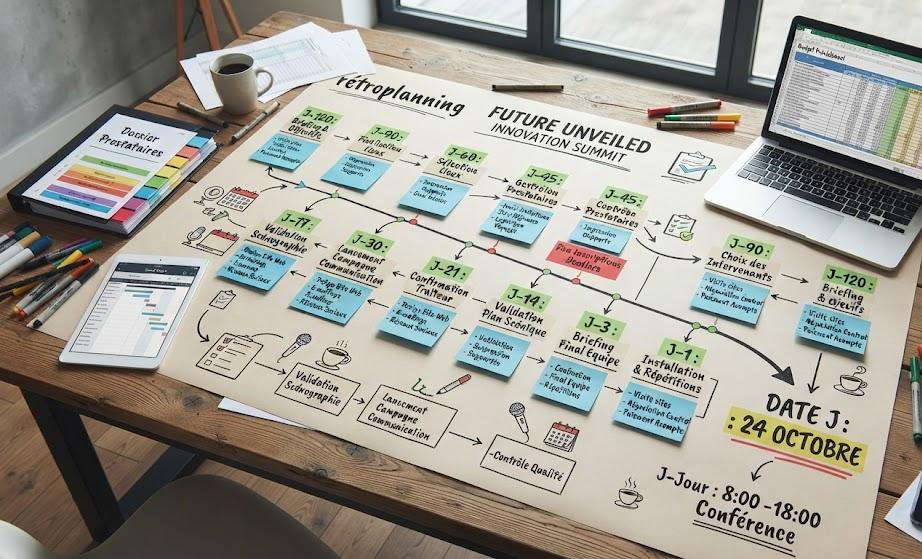
Planning an event in today’s fast-paced environment demands precision and foresight. An effective event timeline serves as your navigational tool, ensuring no detail is overlooked from conception to execution. Whether organizing a major conference or an intimate gathering, a structured timeline guarantees you hit every deadline, manage your budget, and maintain order throughout the process. By understanding the significance of these timelines, event planners can streamline operations and enhance their overall productivity.
The Importance of an Event Planning Timeline
In the evolving landscape of event planning, an event timeline is essential for orchestrating complex activities. It encompasses a chronological checklist of every major task, creating a roadmap for success. The scale of the event determines the timeline’s length; for instance, a high-profile engagement may require 9 to 12 months of preparation, while a smaller event might only need 6 to 8 weeks.
Key Benefits of a Timeline
- Ensures timely progress: Helps in hitting every milestone.
- Vendor management: Aids in coordinating vendor lead times and specifications.
- Resource control: Maintains budget adherence and effective resource allocation.
- Flexibility: Allows for adjustments in case of unexpected changes.
Steps to Create an Effective Event Timeline
Creating a robust event timeline involves several strategic steps. Here’s a month-by-month guide to maximize efficiency and organization:
| Timeframe | Actions |
|---|---|
| 6–12 Months Out |
|
| 3–6 Months Out |
|
| 1–3 Months Out |
|
| 1 Month Out |
|
| Event Day |
|
| Post-Event |
|
Tips for Enhancing Your Timeline
When building your timeline, consider the following:
- Prioritize anchor dates: Identify non-negotiable deadlines like venue holds and client approvals.
- Incorporate vendor timelines: Understand lead times specific to each supplier and include them in your planning.
- Add buffer time: Build in extra time around key milestones for adaptability to last-minute changes.
Final Thoughts on Event Planning Timelines
A well-structured event planning timeline acts as the backbone of effective event management, ensuring tasks are completed systematically and deadlines are never missed. This serves not merely as a schedule but as a comprehensive strategy to guarantee the success of your events, enabling you to react swiftly to challenges and maintain focus on your objectives.